Success story: A women launched at the age of twenty-nine earns millions
The inspiration of the idea
Buying cosmetics from their own store is boring for many women, and businesswoman Joe Horgan is no exception.
Horgan, who is now 49, says she has not been comfortable with the multiplicity of cosmetics and beauty items sold by each brand, with women behind separate tables selling products for each brand.
If the visitor wants to buy products for different brand names, she has to walk from section to section, "a feeling of boredom," says Horgan.
But instead of being bored with the trip to buy cosmetics and failing to do so, Hurgan realized in 1997 that she could provide an alternative opportunity and opened a posh beauty shop to sell a large number of different brands in one place, depending on product quality and customer demand.
Horgan left her job as a project manager at the French L'Oréal beauty shop in Melbourne, Australia, where she lived and launched her own company, Mecca.
The beginning
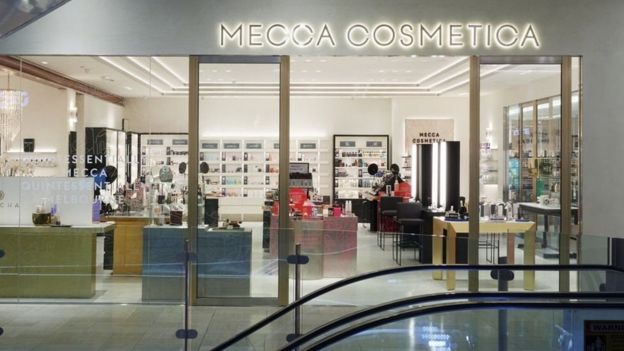
Horgan has sold its home to the pool of capital needed to launch the first Mecca store on the city's luxury South Yarra market, selling cosmetics from the most famous brands such as NARS, Stella and Urban Ducket.
Today, 21 years later, Mecca has 87 branches in Australia and New Zealand, with annual revenues of A $ 287 million ($ 223 million or £ 157 million).
Horgan began her relationship with beauty products since she was a little girl. She enjoyed watching her mother put cosmetics in their home in London, England. "I used to sit with her at the traditional dressing table and talk together," she says, "it was a very special time for me."
When Horgan was 14, her family moved from the UK to Australia in Perth, and like most teenage girls she liked to use cosmetics but nevermore thought she would work in this area.
After completing her school in Perth, she studied English literature at Western University in Australia, then obtained a Master of Communication Science from Boston University in the United States and began working with L'Oreal in London first, then in Melbourne, returning to Australia again.
Horgan says that what attracted her to L'Oreal was her marketing method, even more than her products as if her job there was to train her to start her own business afterward. "It's a lot of work," she says. "You're expected to make good results from the start."
When Horgan left L'Oreal to establish Mecca, she was 29 years old, which made her know what young women were looking for.
Difficult Situations
After Mecca stabilized over the past 21 years, the issue was not limited to gains. After the launch of the company in a few years, the value of the Australian dollar fell, and it became very expensive for the company to buy the global products that its customers requested.
"It was disastrous, you see the price of your merchandise double, and you can not tell your customers, 'Sorry, we have to double the price of the product,'" Horgan said.
Instead of raising prices, Horgan had to reduce the profit margin. "When I think about it now, I consider it a blessing," she said. "It was a very useful experience as an early example of the changes I needed to make in a practical way to make it successful. enormously".
The company also faced a greater challenge in 2014, when the French beauty company, Sevora, opened its stores in Australia, owned by French luxury company LFHM. Today Sefura has 13 branches in Australia.
"There's competition, I think everything brings enormous challenges, and our goal (in simulating the Cervaver TV theme) is to keep the survivors as long as possible, to excel in the game, and to stand up," says Horgan.
What distinguishes Meeca?
Factors that helped them spread more
What distinguishes Mecca is its early and intensive use of e-commerce and social media. The company has been selling through the website since 2001.
The company uses Facebook and Intragam websites to promote its products and connect with customers, and the company's website has nine million hits a month.
Hurgan says Mecca is working hard to ensure a superior level of service to serve outstanding customers.
To achieve this, the company says three percent of its revenues are spent on training its more than 2,500 employees.
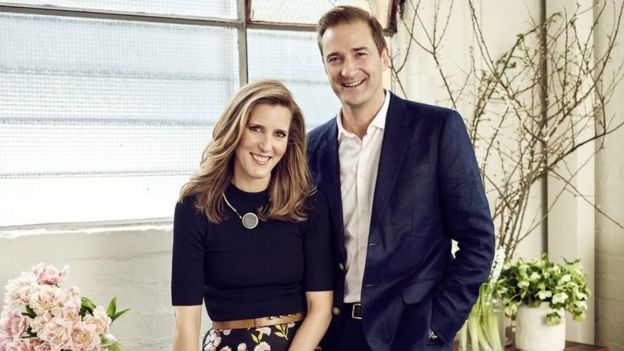
Hurgan says that Mecca's success comes first from choosing the right people to work for, including her husband Peter Wittenhol, who joined the company fully in 2005 as CEO.
The couple met at the university in the United States when they were in their 20s and now have two children.
Horgan says she likes to tell him she's the top manager, but she says it's a real partnership between the two. "I really see we are partners as executive managers, each of us offering a different skill set to work."
"In fact, I'm not an excellent manager, and I think I know exactly what I'm not doing, and I'll hire competent people around me, and I'll give them the thread to learn the way I've learned."
تعليقات
إرسال تعليق